
Bringing home a new puppy is an exciting milestone. From the moment they arrive, you’ll want to start introducing them to the world around them, helping them grow into a happy and confident dog.
While it’s natural to want to show your puppy as much as you can, one of the most valuable puppy training tips is to take things slowly. Training a new puppy isn’t about fitting as many experiences as possible into the first few weeks. It’s more about creating appropriate positive experiences that help your puppy feel safe, secure and ready to learn.
Every puppy is unique. Some will confidently explore new places and meet new people, while others may need more time to adjust. By following your puppy’s pace, recognizing when they need a break and building confidence gradually, you’ll help lay the foundations for a lifetime of positive learning.
Why Puppies Can Become Overwhelmed
For a young puppy, the world is full of unfamiliar sights, sounds, smells and experiences.
They’re adjusting to a new home, a new family and a completely different routine, often while also being away from their mother and littermates for the very first time. At this stage, they’re still developing emotionally and have very little experience to help them understand whether something is safe, exciting or potentially worrying.
Puppies also experience the world differently to us. Their incredible sense of smell, sensitive hearing and lower viewpoint mean they notice things we may not, so a busy town centre, traffic or several visitors at once can feel like a lot for a puppy to process.
One challenge may be manageable, but several new experiences in quick succession can quickly build up. Without enough time to rest and recover, puppies can become emotionally overwhelmed, making it harder for them to learn and enjoy new situations.
Helping your puppy feel comfortable as they explore the world is just as important as the experiences themselves.
Why Your Puppy’s First Experiences Matter
The puppy socialization period is one of the most important stages of your dog’s development. During this time, your puppy’s brain is like a sponge, absorbing information about the world around them and learning what feels safe, enjoyable or scary.
That’s why the best way to socialize a puppy isn’t about ticking off a long list of experiences. Instead, the focus should be on creating positive interactions that build confidence.
Every enjoyable experience helps your puppy develop the skills they’ll use throughout life, making them more adaptable and resilient as they grow.
Valuable experiences to introduce gradually
Here are a few different things you can introduce to your puppy gradually to help them feel more confident as they grow:
- People of different ages, appearances and clothing, including hats, glasses, uniforms and mobility aids.
- Friendly, vaccinated dogs and other animals.
- Different environments, such as parks, woodland, cafés, quiet streets and busier locations.
- Everyday household noises, including the vacuum cleaner, washing machine and doorbell.
- Different surfaces, including grass, gravel, sand, wood and tiled flooring.
- Gentle handling for grooming, checking ears, teeth and paws, and wearing a collar or harness.
- Spending short periods alone to help build confidence and independence.
Remember, every puppy develops differently. Some may approach new experiences with curiosity, while others need more time and encouragement, and that’s perfectly normal.

Using the 777 Rule for Dogs at Your Puppy’s Pace
The 777 rule for dogs is a popular socialization framework that encourages puppies to experience a variety of everyday situations. It typically involves introducing your puppy to seven different surfaces, seven locations, seven types of people and other new experiences to help broaden their understanding of the world.
The 777 rule can be a useful guide during new puppy training to help expose them to a wide range of positive experiences. It may even remind you to introduce things that are easy to overlook, such as different types of toys, walking surfaces or household objects.
However, it’s important to remember that the 777 rule for dogs is exactly that, a guide, not a checklist. Every puppy develops at their own pace and genetics, temperament, early experiences and confidence levels all influence how quickly they feel comfortable with something new.
Adapt the 777 rule to suit your puppy, your lifestyle and the experiences they’ll encounter most often. If your puppy is relaxed and curious, you can gradually build on what they’ve learned. If they seem unsure or overwhelmed, slow things down, revisit the experience another day and celebrate the small wins along the way.
Signs Your Puppy Is Feeling Overwhelmed
Learning to recognize your puppy’s body language and behaviour is one of the best puppy training tips as it can help you understand how they’re coping. Watching for early signs of stress allows you to end an experience before your puppy becomes overwhelmed, helping them build positive associations rather than negative ones.
Signs your puppy may be feeling overwhelmed include:
- Lip licking when they’re not eating
- Yawning when they’re not tired
- Turning their head away or avoiding eye contact
- Excessive sniffing of the ground
- Trying to move away or create distance
- Restlessness or difficulty settling
- Hiding
- Trembling
- Vocalizing more than usual
- A tucked tail, ears pinned back or dilated pupils
Some puppies respond differently to feeling overwhelmed and may become overexcited rather than withdrawn. Frantic behaviour, constant jumping up, or difficulty focusing can also indicate that the situation has become too much.
If you notice any of these signs when training your new puppy, don’t be afraid to pause, move away from the situation, or end the session. Giving your pup the opportunity to recover helps them feel more confident, just ensure that next time you start the training with a lower threshold!
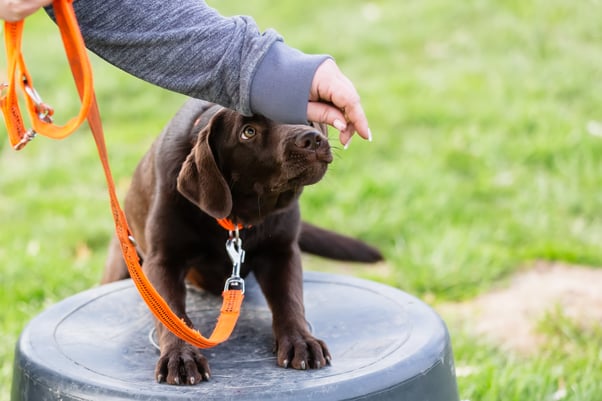
The Best Ways to Socialize a Puppy
When it comes to the best ways to socialize a puppy, slow and steady really does win the race.
Introduce One New Experience at a TimeAvoid combining several unfamiliar experiences into one outing. Instead, let your puppy focus on one new thing before introducing another.
Start From a Comfortable DistanceYour puppy doesn’t need to be in the middle of the action to learn.
For example, rather than walking straight through a busy shopping street, find a quiet spot nearby where your puppy can observe people, traffic and movement while remaining relaxed.
Reward calm behaviour with treats or praise before gradually moving closer over future visits.
Let Your Puppy ChooseDuring your puppy’s socialization experiences, avoid forcing them to greet people or other dogs. Giving them the choice to approach helps build confidence and teaches them that new experiences can be safe and enjoyable.
Keep Sessions ShortYoung puppies tire quickly, both physically and mentally. Several short, positive experiences throughout the day are far more beneficial than one long outing that leaves them exhausted.
Pair New Experiences with Positive RewardsUse treats, praise, toys or play to help create positive associations with unfamiliar situations. Over time, your puppy will begin to associate new experiences with good things happening.
Think About Your Future TogetherConsider the situations your puppy is likely to experience as an adult. If you’ll regularly travel on public transport, visit cafés or enjoy countryside walks, gradually introducing these environments during puppyhood will help prepare them for everyday life.
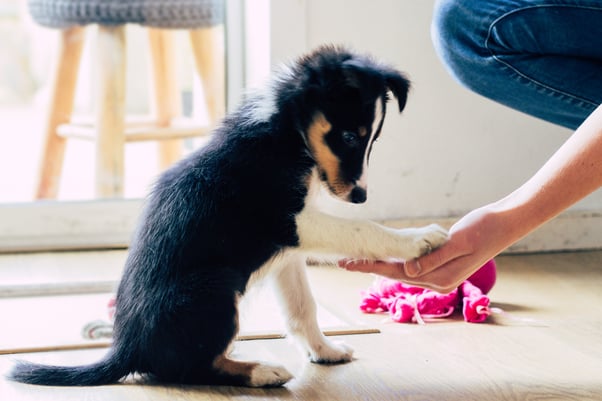
How to Train a Puppy Without Overwhelming Them
Training a new puppy begins from the moment they arrive at home. Training isn’t just about teaching cues. It helps build communication, trust and a stronger bond between you and your puppy.
Some simple puppy training tips include:
- Train when your puppy is awake, relaxed and not hungry.
- Begin in quiet environments with few distractions.
- Break behaviours into small, achievable steps.
- Use clear, consistent cues.
- Reward the behaviours you’d like to see repeated using positive reinforcement whenever your puppy does them, not just in a specific training moment.
- Gradually increase the difficulty only when your puppy is succeeding consistently.
- Finish every session on a positive note.
If your puppy seems confused or stops responding, it’s usually a sign that the exercise has become too difficult. Simply make the task easier next time and build back up gradually.
How to Keep a Puppy Calm
Many new pet-parents wonder how to keep a puppy calm, especially during periods of learning and socialization.
The answer isn’t about doing more. Instead, provide plenty of opportunities for rest and recovery. Puppies need lots of sleep to process everything they’ve experienced during the day. Just like young children, overtired puppies can become excitable, struggle to concentrate and find it harder to regulate their emotions.
Creating a predictable daily routine, allowing regular naps and balancing new experiences with quiet downtime all help your puppy feel emotionally ready to learn.

Don’t Be Afraid to Ask for Help
If you’re unsure whether your puppy is progressing at the right pace, seek advice from a qualified dog trainer who uses positive reinforcement methods.
Puppy classes provide a fantastic opportunity to:
- Meet other puppies in a controlled environment.
- Learn alongside experienced trainers.
- Practise skills around distractions.
- Better understand canine body language.
- Build confidence in a safe, supportive setting.
Professional guidance can help tailor puppy training and socialization to their individual personality and needs.
Every Puppy Learns at Their Own Pace
The best puppy training isn’t about doing the most, it’s about doing what’s right for your puppy. Successful socialization isn’t measured by how many experiences your puppy has, but by how positively they experience them.
By keeping training fun, following your puppy’s pace and celebrating every small success, you’ll build the confidence and skills they need for whatever life brings next.
For more new puppy training and well-being tips, keep exploring the ADAPTIL blog. And while you’re there, don’t forget to sign up for our newsletter to stay up to date with expert advice, product guidance, and puppy-friendly tips!
Leave A Comment
Want to sign up for our blog?
Information Notice
The personal information collected is intended for Ceva Santé Animale, and Ceva group companies, in order to manage your request.This information may be passed on to service providers in order to organize this management. In accordance with the Regulations on personal data you have rights of access, rectification and limitation of processing of your data. You may also, in certain limited cases, oppose the treatment, withdraw your consent and request the deletion and portability of your data. For any request relating to your personal data please go to this page