
Chewing is a normal, natural and healthy behaviour in dogs. It can serve many functions such as helping them explore the world and satisfy their natural instincts. However, if your dog is chewing everything, it can be frustrating, destructive and if excessive, even put their health at risk.
Although regular, calm chewing is beneficial, if your dog is chewing shoes, furniture or other items in your home it can become a challenging and expensive habit. That’s why in this blog we’ll explore the reasons why dogs chew, along with practical solutions to help prevent it.
Why do Dogs Chew?
Primarily, chewing is a natural behaviour that activates the parasympathetic nervous system, also called the “Rest and Digest” system. But the real question is why do dogs chew, and why does it sometimes become a problem? Let me explain.
For both dogs and humans, our nervous system works in two main ways. One part reacts to stress or danger through “Fight or Flight” (sympathetic) mechanisms. This increases heart rate and blood pressure and can even temporarily shut down our thinking brain (prefrontal cortex) if really triggered. You can think of this as a high alert state, often referred to as the “red zone”.
The other main function of the nervous system is to calm us down through parasympathetic activation or “Rest and Digest”. This state can be referred to as the “green zone”, when bodies prepare for rest, digestion and recovery. For dogs, chewing is a way to naturally enter this zone, helping them relax and feel safe.
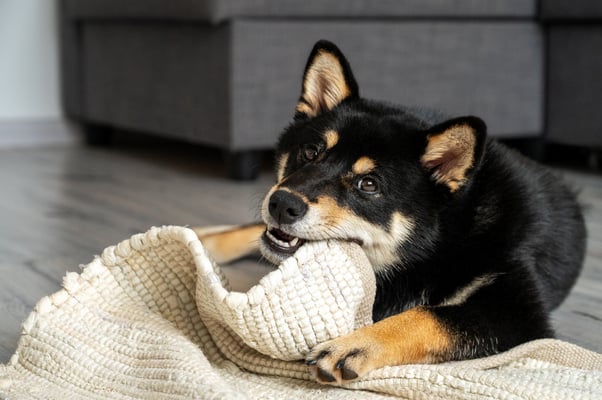
Chewing Behaviour and Stress
When dogs feel anxious, stressed or even extremely excited, their fight or flight system can become activated. This can feel uncomfortable and overwhelming, sometimes leading to a dog chewing everything as a way to help regulate their emotions.
Dogs use “green zone” activities as a way to help calm their heightened emotions, such as stress or anxiety, to self-soothe and get into a rest and digest state. In us humans, these “green zone” activities might be deep breathing, thumb sucking or yoga.
Green Zone Behaviours in Dogs
For our pets, “green zone” activities can manifest differently to options for us humans, such as:
- Sniffing objects
- Licking objects
- Chewing objects
For example, you may notice your dog always licking their paws before they go to sleep, even when there is no itchiness or medical reason. This is a “green zone” activity that helps them relax and prepare for rest. As long as it doesn’t become obsessive or create skin issues, then this is a positive, natural behaviour!
Why Is Chewing a Natural Dog Behaviour?
Chewing, digging and dissecting, or destroying objects, is very similar for dogs. Although our domesticated dogs live very different lives from their wild ancestors, many instinctive behaviours remain.
Historically, wild canids would seek and search for their food as scavengers and often have to tear apart carcasses to access edible parts through chewing, pulling and dissecting.
When dogs engage in these activities today, for example, your dog chewing shoes or furniture, their nervous system thinks they are about to get a meal, activating the “Rest and Digest” system. These instinctive survival patterns remain in modern dogs, which is why chewing is such a natural behaviour.
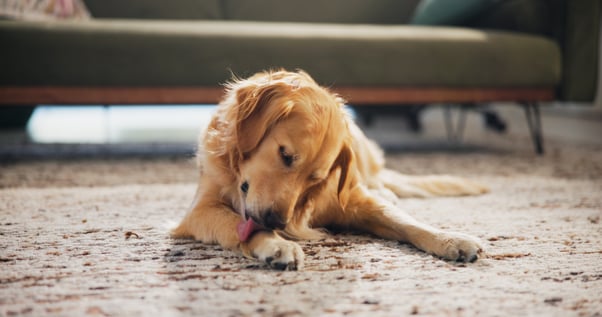
How to Stop a Dog from Chewing Everything
Chewing serves a few different needs in dogs, so the first step in learning how to stop dogs chewing is figuring out the reason behind the chewing. Once we understand the motivation, we can redirect the behaviour away from your dog chewing shoes, furniture and other items like your beloved Birkenstocks!
Let’s break it down into some of the most common reasons for dogs chewing everything.
1. Chewing When Left Alone
Does your dog mainly chew personal items like shoes or underwear when you’re away?
If so, this may be linked to separation distress, where dogs try to cope with being alone by trying to feel closer to you with familiar scents. If you think this is the reason behind your dog chewing, you might notice behaviours such as:
- Waiting by the door
- Barking, whining or howling
- Pacing or restlessness
- Alert but unable to settle
These dogs are in a “red zone” state, meaning they are struggling to self-soothe, unable to cope with being on their own and need help.
If your dog is struggling to settle when they’re alone and isn’t napping frequently or deeply enough, then their emotional regulation will be all over the place as well, which won’t help the situation. The average healthy dog needs at least 16 hours of sleep a day!
How to Help
Separation anxiety or distress is complex, often strongly self-reinforced and rarely solved overnight. You can help stop your dog chewing when left alone with the following methods:
- Playing calming music
- Creating safe zones or cubbies in the house they can relax in
- Using pheromones such as an ADAPTIL Calm diffuser, collars or sprays, which can help in milder cases or with young dogs as they learn to be by themselves
- Gradually teaching your dog to be comfortable when you aren’t with them
If destructive or problematic chewing behaviour is severe or ongoing, reaching out to a Certified Separation Anxiety Trainer (CSAT) or Veterinary Behaviourist will go a long way to resolving this challenging issue as quickly as possible.
2. Chewing During Excitement or Play
Some dogs chew during high-energy play, especially with kids or during exciting moments. This type of chewing demonstrates a “happy but red zone” state, which can be problematic.
Your dog playing nicely with kids is great, but when children play with each other, things can get out of hand quickly. Both young children and dogs don’t always recognize those shifts. Because dogs communicate differently from us, they may struggle to understand when the energy is getting too high or when the interaction has gone on for longer than they’re comfortable with.
That’s why it’s important to always keep an eye on dogs and children, NEVER let them out of your sight. Keeping children under 5 – 7 years old within arm’s reach when in the company of a dog.
The dog body language to look for when they are too excited, or “hyper-aroused” includes:
- Showing whites of their eyes (“whale eye”)
- Excessive panting or barking
- A “grinning” expression or a tense mouth
- Nipping or biting
- A high, stiff wagging tail
- Raised hackles
How to Help Your Dog Stop Chewing
If you notice these signs in the context of high-energy play, then everyone might need a break so your dog can reset. This is an important step when learning how to stop a dog from chewing everything in very stimulating situations.
To help your dog settle, spray some ADAPTIL Transport on a bandana to tie to their collar (after 15 minutes). Then bust out a quick “green zone” activity, such as:
- An appropriate item to chew
- Sprinkling a few treats on the ground for them to sniff to discover
- Offering a frozen lick mat
- Setting up a sniffing game
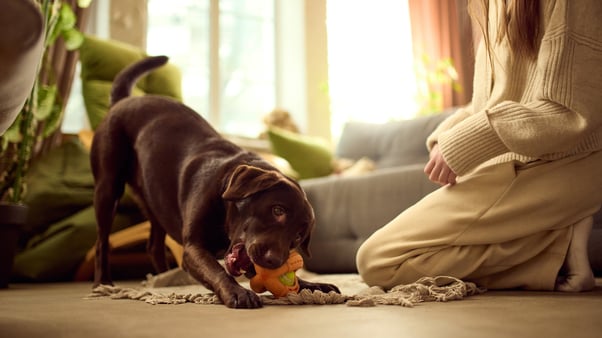
3. Chewing Without the Right Outlets
Sometimes this issue is that your dog is bored but doesn’t have the right “stuff” to chew.
Although bones can be a controversial chewing option, they are high-value, long-lasting and durable, and there are many dogs that will chew on bones in their lifetime without any complications. HOWEVER, as a Veterinarian, I see when it goes wrong, and it can go horribly wrong. Resulting in broken teeth, penetrating wounds in the mouth and gastrointestinal tract requiring surgery, severe constipation and diarrhea.
Better Chewing Options
Providing safe, engaging chew items is one of the most effective ways to stop your dog chewing everything in your home.
- Coffee wood sticks—made from moulded wood pulp with edible glue, these sticks are generally quite durable, digestible and long-lasting without splintering or damaging teeth. A decent coffee wood stick will last my English Staffordshire Terrier (Staffy) days if not weeks, and she LOVES chewing. Probably a little too much…
- Rubber chew toys—Designed for safe chewing, these toys come in different levels of hardness or challenge. Much more satisfying for your doggy friend(s) instead of your dining chair legs!
Most will come with grooves or holes where you can add tasty treats. Chewing these toys also activates their “Rest and Digest” system even more, sending them further into the “green zone”, supporting calm, healthy behaviour.
Key Takeaways
While you may be looking for how to stop a dog from chewing everything, it’s important to remember that chewing is a natural and healthy behaviour that we wouldn’t want to stop altogether.
Rather than punishing your dog for chewing, which can create conflict and mistrust in your relationship, focus on redirecting them to appropriate outlets. This can save your dog chewing your shoes, furniture and favourite items.
Don’t forget to praise and reward your dog every time you notice them chewing a preferred item. Everyone responds better to encouragement than criticism, including our pets. The more we reinforce positive behaviour, the more likely they are to repeat it.
For more tips and advice, why not check out more of our articles? Or, to receive the latest news straight into your inbox, sign up for our newsletter, and we’ll keep you updated.
Leave A Comment
Want to sign up for our blog?
Information Notice
The personal information collected is intended for Ceva Santé Animale, and Ceva group companies, in order to manage your request.This information may be passed on to service providers in order to organize this management. In accordance with the Regulations on personal data you have rights of access, rectification and limitation of processing of your data. You may also, in certain limited cases, oppose the treatment, withdraw your consent and request the deletion and portability of your data. For any request relating to your personal data please go to this page