
Bringing a new puppy home is both exciting and nerve-wracking. As the initial joy settles in, many new pup parents quickly discover that those first few weeks come with plenty of questions, a few challenges, and more than a handful of sleepless nights. If you’ve found yourself looking for new puppy advice or wondering what to expect when getting a puppy, you’re in the right place.
The good news? Everything you’re going through is likely completely normal. Puppies go through a significant adjustment during their first weeks at their new home and understanding what’s happening and how to support them makes all the difference for both of you.
This guide will walk you through the key stages of those early weeks, from what to expect in the first few days to building confidence that will last throughout your puppy’s life.
Why a Puppy’s First Weeks Are Such a Big Adjustment
It’s easy to forget just how much is happening for a puppy when they first arrive. Before coming to you, they were surrounded by their mother, their littermates, and a familiar environment or routine. Suddenly, all of that is gone, replaced by new smells, new sounds, new faces, and a brand new home.
This is a huge transition. Puppies rely on their mother’s presence for comfort and security, and her natural dog appeasing pheromones play a key role in helping them feel safe. Without that familiar reassurance, many puppies go through a period of adjustment that can involve vocalizing at night, clinginess, and difficulty settling.
This doesn’t mean anything has gone wrong, it simply means your puppy needs time, consistency, and gentle support as they begin to understand their new world. Being patient and proactive during this period sets the foundation for a confident, happy dog.

What to Expect in the First Few Days
Those very first days can feel overwhelming, even for experienced pet parents. Here’s a realistic picture of what settling a puppy into a new home often looks like:
Lots of Exploration, and Lots of Sleep
Puppies are naturally curious and will want to sniff and investigate everything. But they also tire quickly. Don’t be alarmed if your puppy alternates between bursts of energy and long naps. Sleep is essential for their development.
Toileting Accidents
These are inevitable. Your puppy hasn’t yet learned the rules of the house, and their bladder control is still developing. Frequent trips outside after meals, naps, and play will help them start to understand where toileting is expected.
For more tips on toilet training your new puppy, check out our guide.
Unsettled Nights
Whimpering or crying at night is very common in the first few days and weeks. Your puppy may be sleeping alone for the first time, so providing a cozy, warm sleeping space near you (but not necessarily in your bed) can help ease this transition.
As your puppy gains confidence and becomes more comfortable sleeping independently, you can gradually move their sleeping space further away from you over time.
Hesitation Or Withdrawal
Some puppies arrive confident and bouncy while others may be more cautious or even hide away at first. Both responses are normal. Give your puppy space to come to you at their own pace rather than overwhelming them with too much too soon.
For more on this early settling period, take a look at our guide on helping your puppy settle into their new home.

Building A Consistent Routine
One of the most powerful things you can do during your puppy’s first month is establish a predictable daily routine. Puppies thrive on consistency. Knowing when they’ll eat, sleep, play, and toilet will help them feel secure and makes training much easier.
A simple daily structure might include:
- Feeding times at the same times each day (usually three to four times for young puppies).
- Toilet trips outside first thing in the morning, after every meal, after play, and before bed.
- Nap times in a quiet, comfortable space. Puppies need a lot of sleep.
- Short play and training sessions to build learning and bonding.
- A wind-down period in the evening to help your puppy learn to settle.
Routine also helps with toilet training. The more predictable your schedule, the more quickly your puppy will begin to understand what’s expected of them. Celebrate every success with calm praise or a small reward, positive associations go a long way.
How To Help Your New Puppy Feel Safe
Creating a sense of safety is everything during those early weeks. When a puppy feels secure, they’re more willing to explore, learn, and bond with their new family. To help, we’ve outlined a few of our top tips:
Set Up A Cozy Designated Space
A crate or a quiet corner with a comfortable bed gives your puppy somewhere to retreat to when things feel like too much. This becomes their safe haven, a place associated with rest and calm.
Introduce New Things Gradually
Whether it’s meeting new people, visiting new rooms, or hearing unfamiliar sounds, take introductions slowly. Keep early experiences short and positive. If your puppy seems overwhelmed, give them space and try again another time.
Avoid Overstimulation
It can be tempting to invite everyone over to meet your new arrival, but too much excitement too soon can be really hard for a puppy to handle. Keep the early days calm and low-key where possible.
For more on getting your puppy’s new environment just right, our article on creating a dog-friendly home for puppies is a great place to start.

Early Training And Socialization
The first weeks at home aren’t just about helping your puppy settle, they’re also a crucial window for learning. Puppies are incredibly receptive during this stage, and the experiences they have now shape how they respond to the world as adult dogs.
Start With The Basics
Simple cues like their name, “sit”, and “come” can be introduced gently from the very start. Keep sessions short, two to three minutes is plenty for a young puppy, and always end on a positive note.
Socialize Thoughtfully
Positive, calm exposure to a variety of people, sounds, surfaces, and situations during the early weeks helps your puppy build confidence. The goal isn’t to overwhelm them with new experiences, but to help them learn that the world is generally a safe and interesting place.
Use Positive Reinforcement
Reward the behaviour you want to see with treats, praise, or play rather than focusing on correcting behaviours you don’t want. This builds trust and makes training an enjoyable experience for your puppy.
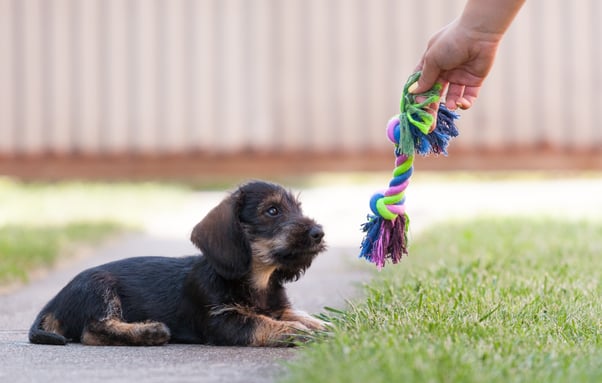
Managing Common Challenges
Even with the best preparation, most pet parents encounter a few bumps in those early weeks. Here are some of the most common:
Crying At Night
This is one of the most universal puppy challenges and, for most puppies, it does ease with time and consistency. A warm blanket (perhaps with the scent of their previous home), a covered crate, and a consistent bedtime routine can all help. Avoid rushing in at every sound but do respond if your puppy seems genuinely distressed or needs the toilet.
Nipping And Mouthing
Puppies explore the world with their mouths, and they haven’t yet learned what’s appropriate. When your puppy nips, calmly redirect them to a toy. Consistency from everyone in the household is key. If nipping is sometimes rewarded with play and sometimes not, it can become confusing for your puppy.
If you’re finding this behaviour challenging, consider speaking to a professional trainer, as this is something that may also be covered in puppy classes.
Velcro Behaviour
Many puppies follow their new caregivers from room to room and become distressed when left even briefly. While this is endearing, it’s worth gently encouraging short periods of independence from early on.
Supporting Independence from the Start
One of the most valuable and often overlooked things you can do during the first month with your puppy is to gently build their confidence to be alone. This doesn’t mean leaving them for long periods, it means teaching them, little by little, that time apart is safe and normal.
- Start with very short absences—Even just stepping out for 10 seconds then coming back into the room can help your puppy learn that you will return. Make sure to return calmly, and gradually extend the time as your puppy becomes more comfortable.
- Keep departures and arrivals low-key—As your puppy settles into home life and their alone-time training progresses, avoid drawn-out goodbyes or overly enthusiastic greetings, as these can make leaving and returning seem like a big event.
- Create positive associations with alone time—As your puppy settles in, introduce puppy-safe toys or simple enrichment activities, such as a snuffle toy, to help them build positive associations with being alone.
For more on this, including advice on avoiding separation anxiety, our article on the dos and don’ts of adopting a puppy is worth a read.
Supporting Your Puppy Every Step of the Way
A puppy’s first weeks are a time of enormous change. By creating a safe, consistent environment, building gentle routines, introducing the world at a manageable pace, and using tools to provide extra reassurance, you’re giving your puppy the very best start.
Remember, every puppy is unique. Some will settle within days while others may take a few weeks to truly find their feet. Be patient, stay consistent, and trust that the bond you’re building during this time will last a lifetime.
For more guidance on supporting your puppy’s well-being, explore the rest of the ADAPTIL blog. And while you’re there, don’t forget to sign up for our newsletter for expert tips delivered straight to your inbox.
Leave A Comment
Want to sign up for our blog?
Information Notice
The personal information collected is intended for Ceva Santé Animale, and Ceva group companies, in order to manage your request.This information may be passed on to service providers in order to organize this management. In accordance with the Regulations on personal data you have rights of access, rectification and limitation of processing of your data. You may also, in certain limited cases, oppose the treatment, withdraw your consent and request the deletion and portability of your data. For any request relating to your personal data please go to this page