
Training a dog is more than just using what are thought to be the best dog training techniques, treats, or repetition. For learning to be truly effective, a dog’s emotional and mental state plays a central role.
If your dog is relaxed, attentive and confident, they will respond far better to training than a stressed, tired or overstimulated dog. In this article, we will explore how to reduce your dog’s stress and create a calm dog training environment.
How Stress Behaviours in Dogs Affect Learning
A dog showing signs of stress will struggle to learn effectively. Scientific research shows that stress releases cortisol, a hormone that disrupts concentration and reduces the ability to memorize new information. In this state, you may notice the following stressed behaviours in your dog:
- Becoming agitated or easily distracted, struggling to focus on instructions
- Showing avoidant behaviours like turning their head away, licking their lips, or walking away
- Reacting more intensely than usual, including barking, jumping, or even growling
- Losing interest in rewards, making motivation difficult to maintain
An overstimulated dog is another obstacle during training and is common among puppies or beginner learners. In an environment that is too noisy, too busy or full of distractions, your dog may feel overwhelmed. Their brain becomes saturated with stimuli, making it difficult for them to calmly process new requests.
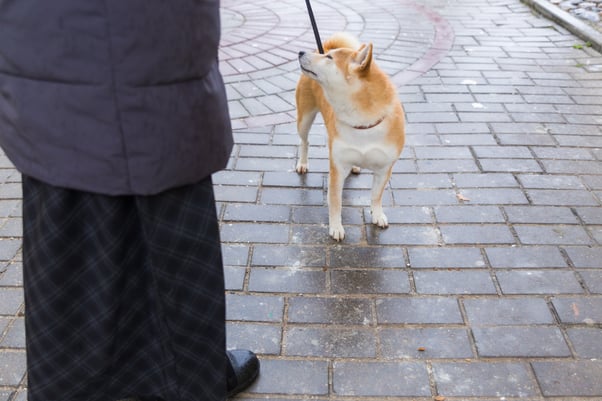
Recognizing Signs of Stress in Dogs
Before starting a training session with your dog, it’s essential to know their signals of stress or discomfort so you can help them feel more comfortable.
Some of the most common signs of dog stress or discomfort are:
- Repeated yawning without any apparent reason for fatigue
- Repeatedly licking their nose
- Ears pinned back, tail down or tucked
- Hesitant body movements
- Excessive panting when it’s not hot or without exercise
- Avoiding eye contact or turning away
- Shaking their body as if to dry off, a sign of tension release
Being attentive to a dog’s stress behaviours allows you to immediately adjust the session, maintain a calm dog training environment and prevent your dog from forming negative associations.
Steps For Creating an Environment for Calm Dog Training
For your dog to learn effectively, it is best to provide a calm, safe environment adapted to its level of experience. Here are some of the best dog training techniques and tips to help:
1. Start in a low-stimulation environment—a quiet room in the house or garden, before moving on to more distracting environments.
2. Limit background noise—turn off the TV, avoid comings and goings in the area, and reduce sources of stress.
3. Plan short sessions—5 to 10 minutes is enough, especially for a puppy. Several short sessions are better than one long one where fatigue takes over. If your dog loses focus during training, it could also be because the session is not motivating them enough.
4. Use appropriate rewards—tasty treats, favourite toys, petting (if your dog likes it) can all be used to reward your dog. Positive reinforcement is one of the best dog training techniques to support learning.
5. Use calming support—depending on where your training takes place, you can plug in an ADAPTIL Calm diffuser, or your dog can wear an ADAPTIL Calm Collar, both of which provide reassuring pheromones to help contribute to a calm dog training environment.
6. Establish a clear start and end to each session—if your dog tends to get frustrated or overstimulated at the end of the session, make your session shorter and offer them some treats on the floor and allow them to sniff, as olfaction is a good way to help a dog calm down.
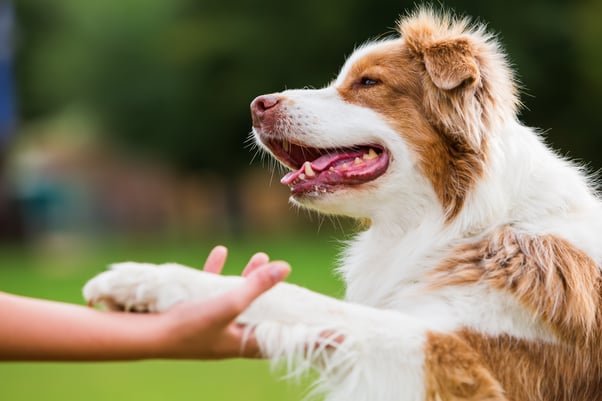
How To Calm An Overstimulated Dog During Training?
It is inevitable that sometimes your dog will become over-excited or distracted. Rather than forcing the issue, it is better to adjust the situation to help your dog reset and return to a calmer state.
Some ways to help calm an overstimulated dog include:
- Taking a break—a few minutes of calm or a leisurely walk can allow your dog to refocus. Encourage them to sniff and use their nose, as this helps them calm down.
- Going back to a simple exercise—ask for a behaviour your dog already knows well to help rebuild confidence and motivation.
- Reducing distractions—change rooms, move away from other dogs or people, or use a lead to limit stimulation.
- Change the pace—some dogs need more time to learn, while others progress faster. Break actions into small steps and adapt your approach to your dog’s individual needs to ensure a calm dog training environment that remains positive and effective.
Above all, keep in mind that training your dog should remain a fun and positive activity, never a source of frustration for them or you!
The Caregiver’s Role in Calm Dog Training
Dogs are very sensitive to their human’s emotions. If you are tense, impatient or frustrated, your dog will sense this and may become defensive.
Conversely, if you are calm and consistent and show your dog you care, you will create a reassuring atmosphere that greatly supports a calm training environment and facilitates learning.
Taking the time to breathe, keeping a soft voice and adopting a consistent attitude are all factors that positively influence the course of your training sessions.
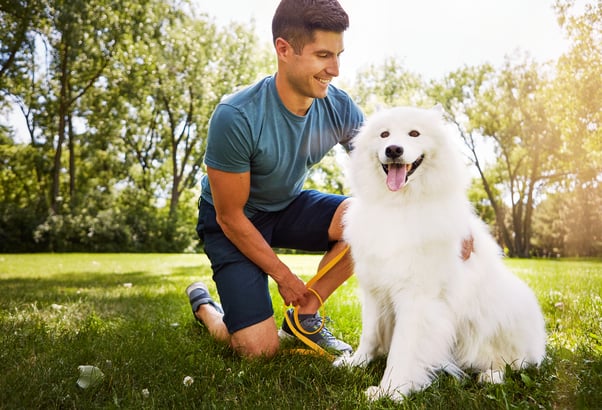
Key Takeaways
A relaxed dog is a dog that is ready to learn. Stress, excessive excitement or an overly stimulating environment blocks learning and risks turning training into a negative experience.
The key elements of successful training include:
- Observing your dog’s body language and recognizing signs of stress
- Creating a calm dog training environment
- Offering short and enjoyable training sessions
- Knowing when to stop or change the pace
By working in a calm state of mind, you not only optimize your dog’s learning abilities, but you also strengthen the bond of trust between you and your dog.
For more tips and advice, why not check out more of our articles online? Or, to receive the latest news straight into your inbox, sign up for our newsletter, and we’ll keep you updated.
Leave A Comment
Want to sign up for our blog?
Information Notice
The personal information collected is intended for Ceva Santé Animale, and Ceva group companies, in order to manage your request.This information may be passed on to service providers in order to organize this management. In accordance with the Regulations on personal data you have rights of access, rectification and limitation of processing of your data. You may also, in certain limited cases, oppose the treatment, withdraw your consent and request the deletion and portability of your data. For any request relating to your personal data please go to this page