
Dogs spend a large part of their day sleeping, but if you’ve ever watched your dog drift off, you’ll know that no two naps look quite the same. Some dogs curl tightly into a ball, some stretch across the floor without a care in the world, while others sleep upside down with all four paws in the air.
These different dog sleeping positions can offer small clues about how your dog is feeling, whether they’re trying to stay warm, cool down, feel secure, or simply get comfortable.
In this guide to dog sleeping positions and what they mean, we’ll explore what common sleeping positions may suggest, why dogs change positions, and how you can support a calm, comfortable sleep environment for your furry companion.
Why Do Dogs Sleep In Different Positions?
Dogs love to sleep, and it’s completely normal for them to spend around 12 – 14 hours resting each day, depending on their age, breed, and lifestyle. Unlike humans, dogs don’t usually sleep all in one go, instead taking multiple naps throughout the day.
Just like us, dogs choose sleeping positions based on comfort and how they feel in their environment. Their sleeping habits can also change depending on the time of day, the season, or what’s happening around them.
To break this down, we’ve outlined a few factors that can influence how your dog chooses to sleep below.
Factors That Influence Dog Sleeping Positions
- Temperature—Dogs may curl up to conserve warmth in cooler weather or stretch out on colder surfaces to cool themselves down.
- Age and joint comfort—Older dogs, or dogs with stiff joints, may prefer positions that reduce pressure on their body or provide extra support.
- Personality—Some dogs naturally sleep deeply and openly, while others remain more alert and cautious, especially in unfamiliar settings.
- Household activity levels—A busy household may encourage lighter sleeping positions where dogs can wake quickly and stay aware of what’s going on.
- Emotional state—A relaxed dog may sleep more openly, while a dog feeling uncertain or unsettled may choose positions that feel safer and more protected.
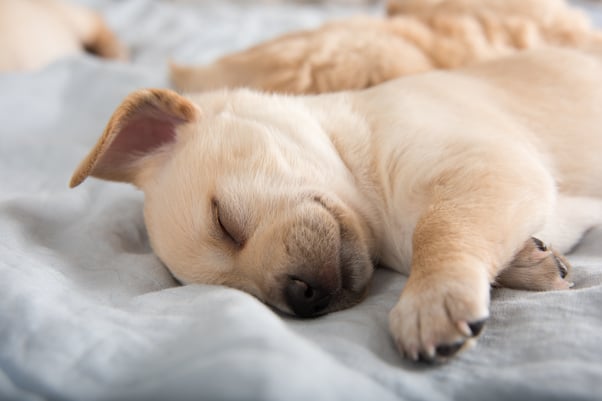
Common Dog Sleeping Positions and What They Suggest
So, what do dog sleeping positions mean? Let’s break down what they can suggest for helpful insight into your dog’s comfort, mood and environment.
Curled Up
One of the most common dog sleeping positions is the classic curled-up ball. In this position, dogs tuck their legs underneath themselves and curl their body around their chest.
This instinctive posture helps protect vital organs and conserve body heat.
You may notice your dog sleeps curled up more often:
- In new or unfamiliar environments
- During cooler weather
- When settling into lighter sleep
Side Sleeping
When a dog sleeps on their side, it is often a sign they feel relaxed and comfortable in their surroundings.
This position suggests trust and security, as the body is more exposed. Dogs sleeping on their side may also be entering deeper sleep stages.
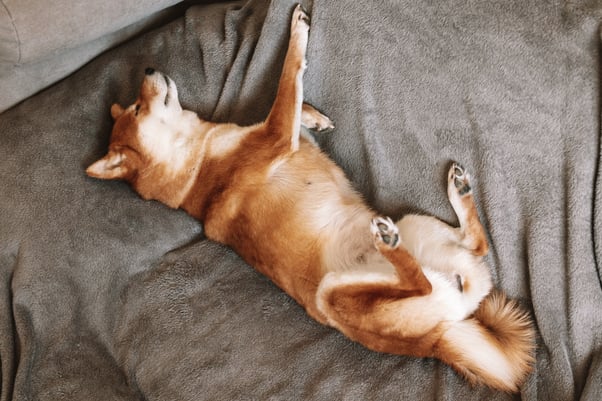
On Their Back With Paws Up
When a dog sleeps on their back with paws in the air, it’s usually a sign of complete relaxation and trust.
This position exposes the belly, one of the most vulnerable areas of the body, which dogs typically only show when they feel safe.
It can also help regulate body temperature by allowing heat to escape more easily.
Lion or Sphynx Pose
In this position, dogs rest with their head on their paws while keeping their body tucked underneath them.
This is often associated with light sleep or alert resting, where the dog is relaxed but ready to respond. It can also be a transitional position before deeper sleep.
On The Belly With Legs Splayed Out
Sometimes called the “sploot”, this position is especially common in younger dogs and certain breeds.
Dogs may flop into this posture after exercise or play. It can also help them cool down by transferring body heat to the floor.
Back-to-back With Another Dog or Human
Dogs are social animals, and sleeping in contact with another dog or person is a sign of bonding and trust.
Burrowed or Tucked Into Blankets
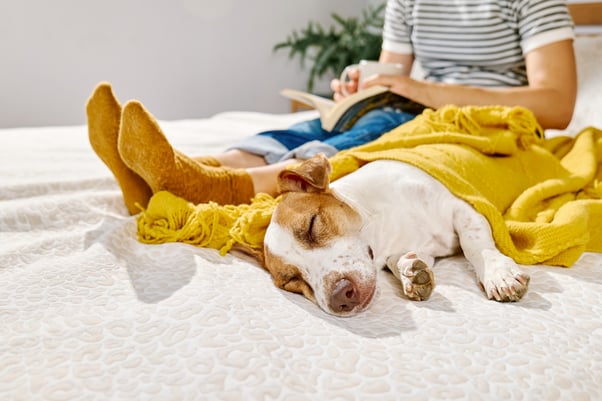
Some dogs love to dig into blankets or bedding before settling down. This can provide warmth, security, and comfort, especially in unfamiliar or colder environments.
Head and Neck Raised
Some dogs prefer sleeping with their head elevated on a cushion or surface edge. This may simply be a comfort preference or, in some cases, help support easier breathing.
Do Dogs Dream In Their Sleep?
Like humans, dogs go through sleep cycles where dreaming can occur. This is often when pet parents may start to wonder about behaviours and ask questions such as: why does my dog shake when sleeping? or, why does my dog breathe fast when sleeping?
During these dream phases, you might notice your dog:
- Twitching
- Moving their legs as if they are running
- Making soft noises or whining
- Snoring
These behaviours are usually a normal part of active sleep and are often linked to dreaming.
However, if movements appear extreme, last for long periods, or seem unusual for your dog, it’s always best to consult a vet for reassurance.
When Changes in Sleep May Signal Something More
Changes in sleeping behaviour can sometimes be a signal that something in your dog’s routine, environment, or well-being has shifted.
While it’s completely normal for dogs to vary how and where they sleep from time to time, it can be helpful to take a closer look if you notice more consistent changes such as:
- Sudden changes in dog sleeping positions
- Sleeping significantly more or less than usual
- Choosing new or unusual sleeping locations
- Restlessness or frequent waking during the night
- Reluctance to settle or lie down comfortably
These changes can sometimes be linked to stress, discomfort, or underlying health issues, but they may also reflect temporary environmental changes such as noise, temperature, or routine disruption.
If these signs continue or you are concerned about your dog’s comfort, it’s always best to arrange a veterinary check for peace of mind and tailored advice.
Supporting Healthy Sleep
Helping your dog get good quality rest is an important part of supporting their overall wellbeing, behaviour, and happiness. Sleep is when dogs recover physically, process experiences from the day, and recharge emotionally.
You can learn more about why this matters in our article on the importance of sleep for dogs.
To help support healthy sleep habits, there are a few simple but effective things you can do at home:
- Provide comfortable bedding in a quiet, draught-free spot where your dog feels safe and undisturbed.
- Create a calm resting space, such as a dedicated ”calm corner”, to help your dog switch off in busy households.
- Respect their preferred sleeping areas, allowing your dog to rest without interruption whenever possible.
- Maintain predictable daily routines, as consistency can help dogs feel more secure and relaxed, and know when there is an opportunity for a nap.
Alongside these steps, some dog parents choose to support their dog’s environment further with calming aids. For example, an ADAPTIL Calm diffuser can be plugged in near your dog’s resting area to help create a reassuring home environment by releasing the calming dog appeasing pheromone.
Understanding your dog’s sleep patterns and preferences can offer a helpful insight into their comfort and emotional state, but above all, it highlights just how important rest is for a happy and healthy dog.
By supporting good sleep habits and providing a calm, comfortable environment, you’re helping your dog feel more secure, rested, and ready to enjoy everyday life.
For more guidance on supporting your dog’s emotional well-being, explore the rest of the ADAPTIL blog and discover how our range of products can help your dog feel calm and secure. And while you’re there, don’t forget to sign up for our newsletter to stay up to date with expert advice and dog-friendly tips!
Leave A Comment
Want to sign up for our blog?
Information Notice
The personal information collected is intended for Ceva Santé Animale, and Ceva group companies, in order to manage your request.This information may be passed on to service providers in order to organize this management. In accordance with the Regulations on personal data you have rights of access, rectification and limitation of processing of your data. You may also, in certain limited cases, oppose the treatment, withdraw your consent and request the deletion and portability of your data. For any request relating to your personal data please go to this page