
Greyhounds are gentle giants, but there’s more to this athletic breed than meets the eye. In fact, they are one of the oldest dog breeds in history, and that brings a whole host of fascinating facts and information about Greyhound dogs waiting to be discovered!
Having been humans’ loyal companions for thousands of years, they are well-acquainted with people and are great family dogs. Their intelligent, gentle and affectionate temperament means they fit perfectly into homes with all kinds of individuals and families.
Despite their athletic background, Greyhounds are relatively low maintenance and enjoy a relaxed lifestyle. Even though they’re known for moving at the speed of light, they’re built for short bursts of energy rather than long runs, making them surprisingly calm around the house.
In this blog, we’ll explore the facts about Greyhounds that every dog lover will want to know, helping you understand more about this fascinating breed and the joy they can bring as canine sidekicks.
1. Greyhounds Are the Fastest Dog Breed
Known for being quick off the mark, one of the most interesting facts about Greyhounds is that they’re the fastest breed of dog, with cheetahs being the only land mammal faster than them! Reaching speeds of up to 72 km/h, their unique double-suspension gallop allows them to hit around 48 km/h in just 3 strides.
Built for sprinting, Greyhounds have long legs to propel them forward, and they spend around 75% of their running time in the air. Their slender, aerodynamic bodies with deep chests, large lungs and narrow waists give them a natural speed advantage. They even use their tails like rudders and their long toes to grip the ground, giving them remarkable arrow-like precision.
.jpg?width=602&height=402&name=shutterstock_2645183429%20(1).jpg)
2. They Have Been Traced Back Over 4,000 Years
One of the lesser-known facts about Greyhounds is that they’re an ancient breed and have followed us humans through time, with Ancient Egyptian pharaohs keeping Greyhound-type dogs! Their popularity only grew as centuries passed, and in medieval England, only noblemen were allowed to own them. Killing a Greyhound was even punishable by death.
3. Greyhound Racing Dates Back to the 16th Century
Much of the information about Greyhound dogs focuses on their legendary racing abilities. For centuries, Greyhounds have been known for racing, as their sleek and agile nature makes them excellent at short bursts of speed rather than lots of endurance.
Although greyhound racing became popular in the 18th century, the 4th Duke of Norfolk established the first rules for this competitive and noble pursuit during Queen Elizabeth I’s reign, all the way back in the 1500s.
4. The Greyhound Racing Era Is Coming to an End
Even though Greyhound racing is still legal in some places, the racing era is gradually being phased out. As a result, it is becoming more common for ex-racing Greyhounds to transition into home life. Greyhounds can live up to 10 to 15 years, but many retire when they are 3 to 5 years old.
If you’re considering adopting an ex-racing Greyhound, it’s likely they’ll transition well into home life, but they may need:
- Patience around new environments
- Gradual introductions to new items
- Help adjusting to household noises
- Gentle socialization
5. Greyhounds Have a 270° Range of Vision
If you thought their speed was remarkable, wait until you hear about their sense of vision. Their 270° range of vision is a fun fact about Greyhounds that you might not have known. This means they can see objects behind them, so there’s no getting away with hiding treats when they’re around!
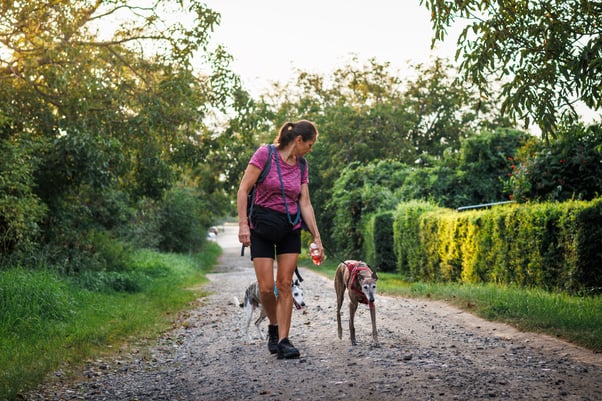
Along with their impressive degree of vision, their stereoscopic eyesight allows them to spot movement over long distances, said to be up to half a mile. Greyhounds rely on their sight rather than their sense of smell when chasing, which makes them excellent at noticing anything that might trigger their instinct to chase. This is why lead walks and a secure garden are important for Greyhounds.
6. Greyhounds Are Surprisingly Low Energy Indoors
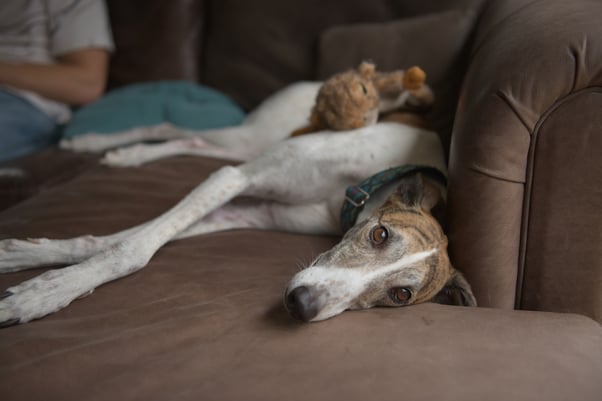
Another surprising piece of information about Greyhound dogs is that they are excellent sofa companions and are often known as couch potatoes. They can sleep up to 18 hours a day, so a comfy sofa is a must!
Greyhounds often sleep on their backs with their legs in the air, a position known as roaching. Sitting upright, as many dogs do, can be physically uncomfortable for many Greyhounds, so you generally see them either standing or lying down.
Their calm energy means that they don’t need to run all the time. Greyhounds can be quite happy with gentle exploration, sniffing walks, and a couple of walks each day, just like many other dog breeds.
7. They Are Thought of as a Healthy Breed
Greyhounds can live up to 15 years, and while some health issues may appear with age, they are generally considered a healthy breed. They are prone to dental disease, so training them for regular toothbrushing is important. Their low body fat also means keeping them warm in winter is essential for their well-being.
One of the more serious health concerns Greyhounds may face is bloat, a life-threatening condition where the stomach twists. This is a common complication in deep-chested dog breeds.
8. Greyhounds are Sensitive Souls
Their sensitive nature is a fun fact about Greyhounds that makes them such wonderful canine companions. They are gentle giants that respond best to positive reinforcement training rather than harsh discipline. Typically quiet, calm, friendly, and affectionate, they get along well with people of different ages and other pets.
9. Their Independence Means Training Takes Patience
Greyhounds are bred to be independent decision-makers, and their instinctive high prey drive means training may require patience. They love routine and predictability, so regular, short training sessions are best to prevent boredom or mental fatigue. Scent work is a great way to help build a dog’s confidence.
Their sensitive nature means they can be naturally cautious and may “freeze” around new experiences or people. When adopting a Greyhound, it’s important to introduce them gradually to new environments and people to ensure they feel comfortable.
10. Italian Greyhounds – Mini Greyhound Family Members
Italian Greyhounds are a distinct breed that share the look of a Greyhound but are much smaller. Some facts about Italian Greyhounds include:
- More active and high energy
- Finer body type and more fragile
- Often very closely bonded with their humans
- Need social companionship and are often called “Velcro dogs” due to their strong attachment to their humans
Famous Greyhounds Over The Years
After exploring what makes Greyhounds such a unique and lovable breed, it’s only fitting to celebrate some of the standout dogs who’ve made their mark on history. These famous Greyhounds show just how remarkable this breed can be.
- Mick the Miller—an Irish racing greyhound from the 1920s. He won back-to-back English Greyhound Derbies in 1929 and 1930 and even starred in his own film, Wild Boy.
- Master McGrath—an Irish racing greyhound who won the Waterloo Cup three times and earned an audience with Queen Victoria. A bronze statue of Master McGrath can be found in Lurgan, Ireland.
- Santa’s Little Helper—the famous fictional greyhound from The Simpsons.
- Lady Greyhound (or Steverino)—mascot for the Greyhound Bus Company, making TV appearances in the 1950s.
- Feather—record holder for the highest canine jump (1.9m) in 2017.
- Jock—Dr Robert Ford’s dog in the Westworld TV series.
For more information about dog breeds and ways to support your dog’s well-being, explore the rest of the ADAPTIL blog. And don’t forget to sign up for our newsletter to stay up to date with the latest guidance and support for your dog.
Leave A Comment
Want to sign up for our blog?
Information Notice
The personal information collected is intended for Ceva Santé Animale, and Ceva group companies, in order to manage your request.This information may be passed on to service providers in order to organize this management. In accordance with the Regulations on personal data you have rights of access, rectification and limitation of processing of your data. You may also, in certain limited cases, oppose the treatment, withdraw your consent and request the deletion and portability of your data. For any request relating to your personal data please go to this page