
We all want the best for our dogs. We feed them quality food, give them all the best toys and love them as family. But are they happy?
As humans, we often express ourselves by grabbing at things we like, are loud when we get excited, and show affection with a big hug. However, dog language is different and their displays of emotion aren’t always as obvious as ours. In fact, those ways in which we show emotion can be considered as pretty rude in dog language. Most dogs are very tolerant of the world they live in.
With that in mind, today, we’ll decode the signs of stress in dogs to better help you understand how their behaviours reveal their emotions, and I’ll be sharing tips on how to help a stressed dog.
How to Tell if a Dog Is Stressed
No one is born knowing how to speak dog, but we can learn. Once you start to see dog’s stress signals in their body language, you’ll begin to see just how common stress can be among our furry friends. Although there may only be certain circumstances that trigger stress, knowing how to tell if your dog is stressed benefits their well-being and our safety!
What is important, however, is not to just focus on one position, look or activity, but the whole dog and to consider the bigger picture.

What Is Stressed Dog Behaviour?
Most of us can easily recognize the more extreme signals of stress in dogs, often seen during fireworks or thunderstorms. These can include pacing, panting, barking and wide white eyes (also known as “whale eye”). These overt stressed dog body language signs of “fight and flight” are usually easy to pick up on.
But what about the more subtle stressed behaviours dogs use to express their discomfort? “Freeze, fiddle and fawn” is a helpful way to remember these quieter stress signals which can be harder to spot or easier to misinterpret. Some examples include:
- Full body “shake-off”—we expect to see this behaviour when a dog is wet or itchy, but a dry shake-off can also help to release built up energy from stress from “big feelings”, such as after stressful interactions or an intense game with another dog. This action acts as an emotional reset for dogs. (It’s helpful for us humans too, try a full body shake-off when you’re feeling stressed and help release some of that nervous energy!)
- Tail wag—unfortunately, not all tail wagging means happiness and can be misinterpreted. Dogs have their own “tail language,” so the height, speed, tension and direction of the wag can signal different emotions or levels of stress.
The good news is, there’s plenty more helpful information available on how to read dog stress signals to help strengthen your bond and your pup’s well-being. The ADAPTIL Dog Body Language Course is a great resource to help you decode your dog’s body language by watching videos.
Another resource that I thoroughly recommend is the book Doggie Language Book by Lili Chin. It’s a fascinating and informative read for both adults and children with delightful illustrations by Lili!
How to Help a Stressed Dog
Let’s look at the science that helps us understand how to give our dogs a better life.
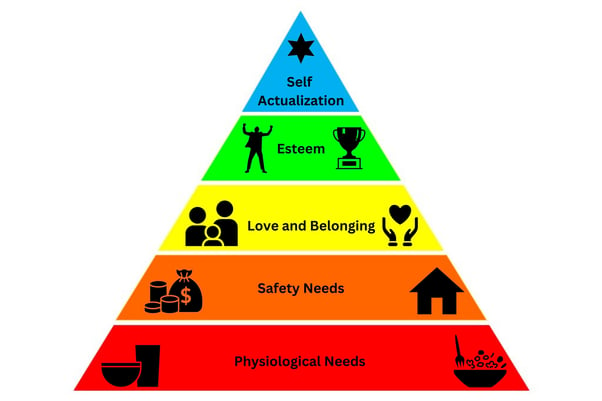
It may sound fancy, but Maslow’s Hierarchy of Needs is a great framework for helping us answer this question. It outlines the fundamentals of life and applies to both humans and our canine companions. The idea being that you cannot progress to the next stage of the pyramid unless the level below has been fulfilled or met with.
- Physiological needs—having the basics like food, water and sleep is straightforward, but surprisingly many pets are lacking true rest. A lack of sleep can make it much harder to regulate emotions, leading to “big feelings”. Big feelings can come from fear or stress, or even from a happy place (think about the intensity of emotion you might experience during the happy ending of a movie). Big feelings can result in problematic behaviour such as destructive issues or aggression.
- Security and safety—everyone deserves to feel safe. Feeling insecure prevents progress to the rest of the pyramid. It’s important to note that dogs with untreated anxiety or mental health conditions may not feel safe in certain situations that we may consider to be safe.
Contact your vet for support—they may be able to assist with your dog’s behaviour issue themselves or refer you to a suitably qualified behaviourist. Products that can be helpful include ADAPTIL Calm diffuser, which contains the same reassuring message that mother dogs release to their puppies, supplements with calming ingredients or specific diets that can help to reduce dogs’ stress-related signals. - Socialization—as a generally selective social species, dogs need meaningful relationships to thrive. Sociability is a spectrum, so while some breeds may tend towards being naturally more social, every dog is an individual. Dogs may also feel more or less social on any given day depending on their health or whether they had a good sleep.
Some dogs form strong bonds with only a few individuals, whereas as others might be more social across the board. Either way, it’s important to honour their preferences, engage with and accept their whole self to build them a happy and fulfilling life. - Self-esteem—dogs need opportunities to succeed and feel accomplished. This could be through letting them win a game of tug-of-war more frequently, engaging in challenging activities like scent work, or even something simple like creating a DIY snuffle box for them to discover. There are many benefits for our dogs’ health and well-being when we encourage them to sniff.
By considering the points above, you can better understand how to help your dog when they’re stressed, giving them the chance to feel completely fulfilled. We know that we can’t read our dogs’ minds, but we can do our best to help them be the happiest versions of themselves!
For more tips and advice, why not check out our other blogs online? Or to receive the latest news straight into your inbox, sign up for our newsletter and we’ll keep you updated with everything we’re up to.
Leave A Comment
Want to sign up for our blog?
Information Notice
The personal information collected is intended for Ceva Santé Animale, and Ceva group companies, in order to manage your request.This information may be passed on to service providers in order to organize this management. In accordance with the Regulations on personal data you have rights of access, rectification and limitation of processing of your data. You may also, in certain limited cases, oppose the treatment, withdraw your consent and request the deletion and portability of your data. For any request relating to your personal data please go to this page