
When adopting a rescue dog, the first days, weeks, and months of living together are crucial for helping you and your new canine companion adapt to life with each other as quickly and smoothly as possible. In this article, we’ll explore expert tips that can help your newly adopted dog feel secure and at home in their new environment.
Things to Consider When Adopting a Dog
Before bringing a dog or puppy home, it’s important to consider how the change in their environment will affect them. While some dogs may come from environments like the one you offer, many others do not. Big and sudden changes can cause stress and anxiety in dogs, so it’s important to make the transition to a new environment as gradual as possible.
For your adopted dog, it might be their first time living inside a house or building an affectionate relationship with people. Your new companion will need a few days to get to know their new home, the areas where you regularly walk, and even the different family members.
If your dog has never lived in a family environment before, they might not display the behaviours you’d expect from an adult dog. They may not know how to walk on a lead or be toilet trained, which is why patience is key when adopting a rescue dog.
At Home Tips for Helping a Rescue Dog Adapt
These at home tips will tell you how you can help your newly adopted dog positively adapt to their new environment, as well as how to build trust with your dog:
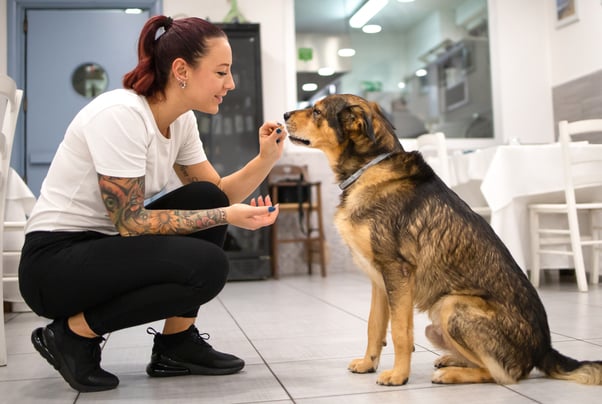
- Give your new dog the time and space they need to take the initiative to approach you and never force an interaction. If you want to pet or call them, position yourself a few meters away, crouch down, and call them with a gentle voice. If they don’t come, give them some time and try again later.
- When bringing a puppy or dog home, show them your entire home. Make sure they know the places where they can access water, food, and their resting areas.
- Plug in an ADAPTIL Calm diffuser in the area that they will be resting in. The calming pheromones released from the diffuser will help your dog settle by providing them with natural reassurance.
- Use a soft and pleasant tone of voice when speaking to them, avoiding loud or sudden noises.
- If you need to give them a cue or move them from a place, like getting them off the sofa or taking something out of their mouth, do so by exchanging it for a treat. Never do it abruptly or punish them.
- Avoid visits, especially from young children, to foster a calm environment during their first few days.
- All family members should agree on the rules, such as whether your dog can get on the sofa or beds. Once decided, maintain these rules; they should be clear from the beginning and followed by everyone in the household.
- Try to follow the same routines, at least for the first few days. If you then want to make changes later, do so gradually over time to help your dog adapt. Establishing a consistent routine with your dog will also help strengthen your human-canine bond.
- Ensure they always have motivating and healthy objects to chew on, such as deer antlers, pressed leather bones. To keep them entertained and relaxed, use toys such as activity feeders or snuffle mats.
Tips for Walking Outdoors With an Adopted Dog
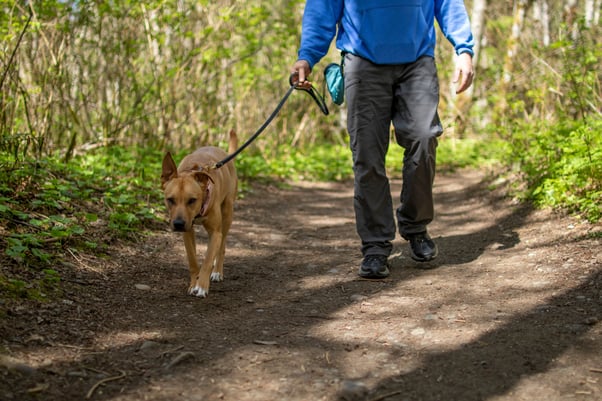
- When conquering the outdoors in the first few weeks after adopting a rescue dog, it’s best that walks are taken in quiet places, avoiding environments with lots of visual and auditory stimuli, like busy streets or shopping centres.
- As you become more accustomed to each other, you will learn how to build a bond with your dog, discover which places they enjoy most and understand what activities they prefer when outdoors.
- Do not let them off their lead in areas not designated for this to avoid them running away.
- Pay attention to their reaction to strangers. If you observe signs of rejection such as moving away, avoiding coming close, or leaving if touched, do not force them to interact. This is especially important with children.
Ways to Help Shape Their Behaviour
Your new four-legged friend will get to know you just as you will get to know them, and you will adapt to each other over time. However, it is important that you understand what they are telling you. Recognizing the meaning behind your dog’s body language is key to understanding and building trust with your dog.
Use training sessions to teach them how you’d like them to behave and include positive reinforcement by praising them when they show a desired behaviour. Do not focus on scolding them for inappropriate behaviour, as with any dog, this doesn’t help them learn and can impact the development of your relationship.
Introduce all routines gradually to give them time to adapt. For example, when you must leave them alone, start with short periods at first and after a walk. As they get used to their environment, encourage calm behaviours with petting of their preferred areas and treats. This is one of the most effective strategies for helping your dog stay attentive and calm.
If you encounter any difficulties after adopting a rescue dog, seek help from a suitable professional. The sooner you act, the easier it will be to establish good habits and reinforce desired behaviours.
For more tips and advice, why not check out our other articles online? Or to receive the latest news straight into your inbox, sign up for our newsletter and we’ll keep you updated with everything we’re up to!
Leave A Comment
Want to sign up for our blog?
Information Notice
The personal information collected is intended for Ceva Santé Animale, and Ceva group companies, in order to manage your request.This information may be passed on to service providers in order to organize this management. In accordance with the Regulations on personal data you have rights of access, rectification and limitation of processing of your data. You may also, in certain limited cases, oppose the treatment, withdraw your consent and request the deletion and portability of your data. For any request relating to your personal data please go to this page