
Petting is a wonderful way to show affection and bond with your four-legged friend. However, not all dogs enjoy being petted in the same way or in certain situations.
Understanding where and when your dog likes to be stroked is key to building trust, strengthening your bond, and supporting their overall comfort and well-being. Building this connection involves learning how to pet a dog in a way that they feel comfortable with, rather than assuming all dogs enjoy the same type of contact.
In this blog, we explore how dogs respond to touch, what they enjoy, and how to recognize their signals more clearly.
Do Dogs Like Being Stroked?
Stroking can be reminiscent of the comforting grooming behaviour mother dogs provide to their puppies. Because of this, many dogs learn to associate gentle touch with humans as a form of affection and reassurance. This explains why many dogs do enjoy being stroked, especially in calm, familiar situations.
This positive association is often strengthened when petting is paired with a calm voice and relaxed interaction. It’s usually in these moments that dogs begin to understand touch as a positive social experience, shaping how dogs like to be petted in everyday life.
Research shows that physical contact can also have a biological effect, triggering the release of oxytocin in both dogs and humans. This supports feelings of trust and calm when the interaction is welcomed.
However, touch is only beneficial when the dog is relaxed and has chosen to engage. This is the foundation of how to pet a dog in a way that respects their comfort and consent.
Understanding Each Dog’s Stroking Preferences
It is important to understand that interactions must be consent-based. Dogs are sentient beings whose preferences can change depending on age, health, context, and past experiences. This means how dogs like to be petted may vary from one dog to another and even from one moment to the next.
All dogs have their own individual preferences when it comes to interacting with people. While some dogs may be comfortable receiving attention from everyone, others may find strangers or unfamiliar situations more difficult.
In some cases, dogs may also need time to become comfortable with touch in certain areas, even from a trusted caregiver. Over time as trust builds, they may begin to relax and enjoy interaction more consistently.
When human interaction is welcomed by a dog, an increase in oxytocin is more likely, supporting feelings of trust and comfort.
Where Do Dogs Like to Be Stroked?
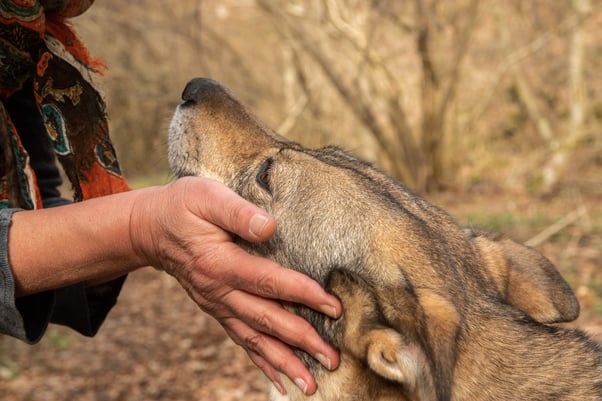
While every dog has individual preferences, low-pressure areas are a good place to start to help build trust and connection.
- Chest and shoulders—these areas often feel social, non-threatening, and are easy for the dog to lean in when they are enjoying the interaction.
- Base of their ears—many dogs enjoy being touched here as there are many nerve endings which can provide a soothing sensation when petted gently.
- Side of the neck and under the chin—these are good places to pet a dog as they allow the pooch to keep their vision forward, meaning they can have a soft gaze between you at the same time, another positive sign between you and your dog.
However, preferences vary from dog to dog. Learning how dogs like to be petted always comes down to observing the individual, rather than following fixed rules.
Areas Many Dogs Find Sensitive
There are several areas that many dogs find more sensitive, and being aware of these helps when learning how to pet a dog.
- Tail—this can be a vulnerable and sensitive area for many dogs, and touching it is often not well tolerated. Some dogs may enjoy gentle scratching at the base of the tail, but it’s important to understand your dog’s response to make sure they are comfortable.
- Belly—when a dog rolls over and shows you their belly, this can be a misunderstood sign. While rolling over can sometimes look like an invitation for a tummy rub, it is often a submissive gesture. In many cases, it simply means the dog is trying to show they are not a threat, rather than asking to be touched.
- Head—pats on the head can feel intrusive, particularly if a hand approaches from above. This can feel overwhelming, particularly for more sensitive or cautious dogs.
That said, every dog is different. Some may learn to enjoy touch in these areas over time, especially with a trusted caregiver. The key is to build trust gradually and learn what your dog is telling you.
Understanding how dogs like to be petted includes recognizing both what they enjoy and what they may find uncomfortable. These preferences can vary not only between dogs, but also as their confidence and comfort develop over time.
For more tips on how to build up your dog’s confidence, check out our previous blog.
How Dogs Show They Like (Or Don’t Like) Being Petted
When interacting with a dog, they usually communicate clearly whether they are enjoying the experience or would prefer some space.
Signs a dog is enjoying the interaction include:
- Leaning in
- Soft eyes
- Relaxed body posture
- Loose tail
- Offering a body part (for example, kneading their side into you or pawing at you when you stop petting them as a sign they want you to continue)
Signs a dog may want space include:
- Moving away
- Turning their head or body
- Whale eye (showing the whites of the eyes)
- Lip licking or yawning
- Stiff posture
- Ears pinned back
- Furrowed brow
These signals are an essential part of how to pet a dog safely and respectfully, as they help guide when to continue and when to stop.
If you’d like to better understand what your dog is communicating in these moments, our guide to decoding your dog’s body language can help you recognize those subtle signals more clearly.
How To Pet A Dog Safely & Positively
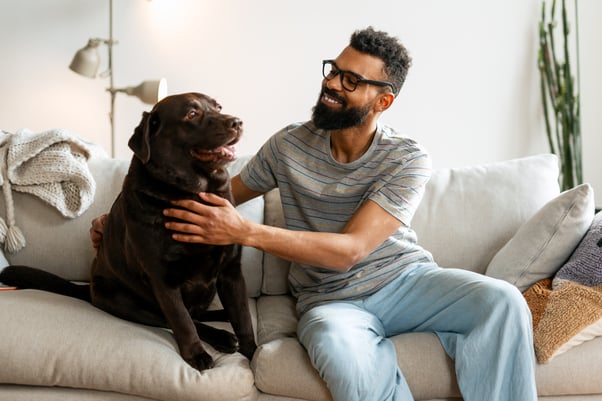
When interacting with a dog, understanding how to pet a dog safely and build trust is key to starting the relationship on the right foot.
It is important to always follow the dog’s lead. Allow them to choose whether they want to interact and approach you. If they do, begin with a few gentle strokes in an area that is commonly comfortable for most dogs, then pause and observe their response.
Short, slow strokes in the direction of the fur are recommended, and continuous touch should be avoided to prevent overwhelming the dog. It is also important to never assume ongoing consent.
If you are meeting a dog you do not know, always check with the caregiver first to ensure it is safe and appropriate to interact, as some dogs may not be comfortable with unfamiliar people.
When Not To Pet A Dog
It’s also important to know when not to pet a dog, as timing matters just as much as where contact is made. Avoid petting when dogs are:
- Meeting you for the first time—instead of reaching out straight away, give the dog space and the choice to approach you first.
- Highly focused (for example, while playing, sniffing, or on alert)
- Agitated or actively seeking space
- Injured or in pain—be mindful that some areas may be sensitive, though some dogs may still seek gentle reassurance through contact.
- Sleeping or easily startled
Recognizing these moments is an important part of how to pet a dog safely, helping ensure that interactions are respectful, positive, and in line with how dogs like to be petted.
Helping Children & Families Interact Safely with Dogs
We understand that children are often eager to interact with dogs, but these boundaries must always be approached carefully and respectfully.
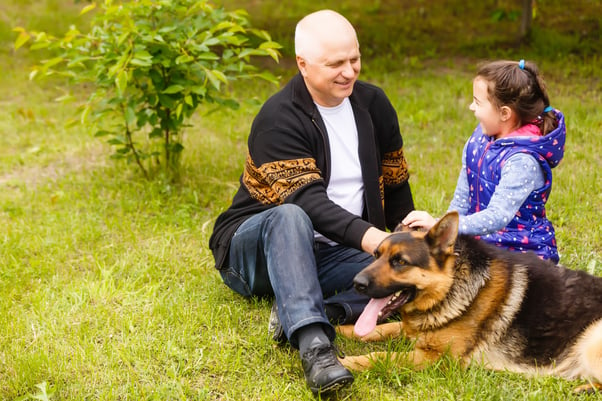
To help children learn safe interactions, it is important to first check with the dog’s caregiver before approaching. Children should be encouraged to let the dog come to them, giving the dog time to sniff and decide whether they want contact. Standing side-on and watching the dog’s body language helps ensure the interaction feels comfortable.
If the dog is relaxed, brief gentle strokes on areas like the shoulder or side of the neck are best, followed by a pause to see if the dog wants to continue. Hugging should be avoided, as most dogs do not enjoy being restrained or restricted. Children should always be supervised, with attention paid to any signs that the dog may want space.
This approach helps ensure safe, positive interactions and supports a better understanding of how to pet a dog in a way they enjoy.
Supporting Calm, Positive Interactions
Calm dogs are generally more open to positive touch and gentle interaction. When a dog feels relaxed, they are more likely to enjoy being stroked and respond positively to it.
Reducing stress can therefore support better, more comfortable experiences for both dog and dog parent. Products such as the ADAPTIL Calm Diffuser, which releases dog appeasing pheromones to help create a more settled home environment, can help to create a more comforting environment at home, while the ADAPTIL Calm Collar provides continuous support for dogs when out and about, helping to promote reassurance in everyday situations.
Building Trust Through Better Understanding
Petting is a powerful way to build connection, but it is not experienced the same way by every dog. The key lies in choice, timing, and learning to read each dog’s individual signals.
When we respect a dog’s preferences and respond appropriately, we strengthen trust and deepen the bond between dogs and their humans. This kind of relationship can also have wider wellbeing benefits, as explored in our article on 5 Ways a Human-Dog Bond Can Help Relieve A Dog’s Anxiety.
For more advice on understanding your dog’s behaviour, and building positive, trusting interactions, why not explore the rest of our blogs? And while you’re there, don’t forget to sign up for our newsletter to stay up to date with all the latest tips from ADAPTIL.
Leave A Comment
Want to sign up for our blog?
Information Notice
The personal information collected is intended for Ceva Santé Animale, and Ceva group companies, in order to manage your request.This information may be passed on to service providers in order to organize this management. In accordance with the Regulations on personal data you have rights of access, rectification and limitation of processing of your data. You may also, in certain limited cases, oppose the treatment, withdraw your consent and request the deletion and portability of your data. For any request relating to your personal data please go to this page