
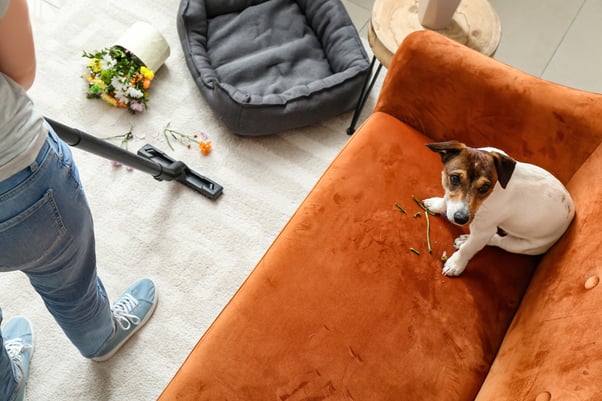
As a dog parent, you may have experienced the look of guilt cast upon your pup’s face after they’ve done something they shouldn’t. But do dogs actually feel guilt, or are they clever enough to know that a dog’s guilty face is enough to melt our hearts and distract us from their wrongdoings?
Today, we’ll explore whether dogs really know when they’ve done something wrong and how you can respond when your pup finds themselves creating mischief.
What Does a Dog’s Guilty Face Look Like?
If your dog’s done something wrong, you may be met with a well-timed guilty expression. Dogs use certain body language cues to express their “guilt”, and a guilty look on your dog’s face may include:
- Whale eye, where you can see the white of their eye
- Ears back
- Lowered head
- Lowered body position
- Lip licking or yawning
- Looking away or their body moving away

Why Do Dogs Look Guilty?
Do dogs really know when they’ve done something wrong, or are those guilty looks created by something else? Dogs are experts at reading our body language and responsive to their humans’ mood, tone, facial expressions and posture. So although the guilty look on your dog’s face may seem genuine, it’s more of a gesture of appeasement than true guilt.
A dog’s “guilty face” is often our human interpretation of their body language, created by our own emotions and understanding. Rather than feeling guilt, your dog is trying to avoid confrontation and diffuse the situation. If they sense your frustration or anger, they’ll respond in ways that make them appear guilty.
So, to answer the big question of do dogs feel guilt? Unfortunately, the answer is no. Although dogs can feel emotions like us humans, guilt isn’t one of them, and the look of guilt from your pup is simply a reaction to our behaviour.
Do Dogs Understand Consequences?
Even though they don’t experience guilt, dogs do understand consequences by associating actions with outcomes. This means they understand immediate, direct consequences and can learn that actions lead to specific outcomes. Dogs are most responsive to consequences that happen right away, but they can also pick up on changes in human behaviour, using tone, body language, and past experiences to recognize when something isn’t quite right.
How to Respond When Your Dog’s Done Something Wrong
Whether your dog is “guilty” or not, your response to their behaviour has the biggest impact. Even if you’re frustrated by your dog’s actions, it’s important not to scold them, as this can impact your relationship. Instead, try focusing on these strategies:
- Try to work out why the behaviour has happened.
- Use clear training cues.
- Manage their access to items they shouldn’t have, such as putting shoes out of reach or offering alternatives like chew toys or opportunities to practice wanted behaviours.
- Interrupt undesirable behaviour as it’s happening.
- Reward desirable behaviours so your dog is motivated to repeat them.
It’s also important to consider your dog’s temperament. Sensitive or easily worried dogs may need a gentler approach to avoid causing stress. Pay attention to their body language so you can spot signs of stress early. With consistent, clear training and plenty of rewards for positive behaviours, your dog will gradually learn what is and isn’t acceptable. Meaning you won’t be seeing your dog’s guilty face quite as often!
For more articles and advice on dog behaviour, keep exploring our ADAPTIL blogs online. And while you’re here, don’t forget to sign up for our newsletter to stay up to date with all the latest tips and advice!
Leave A Comment
Want to sign up for our blog?
Information Notice
The personal information collected is intended for Ceva Santé Animale, and Ceva group companies, in order to manage your request.This information may be passed on to service providers in order to organize this management. In accordance with the Regulations on personal data you have rights of access, rectification and limitation of processing of your data. You may also, in certain limited cases, oppose the treatment, withdraw your consent and request the deletion and portability of your data. For any request relating to your personal data please go to this page