
With summer social plans well underway, dining al fresco is a popular activity that lets us get the most out of the nice weather. But saying yes to BBQ and picnic plans doesn’t mean you can’t bring your canine companion along. In fact, planning a pup picnic is a great way to spend time with your furry friend! All it takes is a bit of prep, and you can create the perfect picnic for you and your pooch.
When planning a picnic, it’s important to know what food is safe for dogs and what may be harmful to them. Packing food that dogs can eat allows them to be involved in the activity just as much as you, while also keeping them safe and healthy.
What Can Dogs Eat and Not Eat?
There are many human foods that can be harmful to dogs, but there are also many healthy options that they can enjoy with you. Learning what foods are harmful or even poisonous for dogs versus what foods are safe for them to eat can help you keep your pooch out of harm during summer activities.
When planning a picnic with your dog, it’s important to consider their diet. Our furry friends are omnivores, so their diet consists of meat and plant-based foods. This means that there are many vegetables and fruits dogs can eat that can benefit their health.
What Food Is Safe for Dogs?
There are many safe human food options for dogs that you can enjoy together at a picnic. Some foods even have great health benefits and can be given to your dog as a healthy and delicious treat!
Fruit
- Blueberries—These are packed with antioxidants as well as vitamins C and K, which help to support your pup’s overall health.
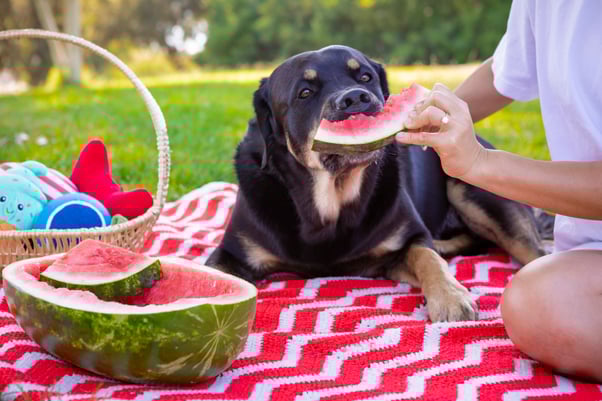
- Watermelon—A hydrating snack for the warm weather that’s also low in calories. Before feeding watermelon to your pup, make sure it’s seedless and rind free.
- Apples—This is a great fruit that dogs can eat, as it’s high in fibre and vitamins A and C. Just remove the seeds and core before serving.
- Strawberries—They are rich in antioxidants, vitamin C, and potassium, which helps to boost the immune system.
- Bananas—When peeled, they are a great source of magnesium, which is good for bone health.
Vegetables
- Carrots—Raw carrots are great for dental health, low in calories, and high in beta-carotene and fibre, which can help vision, skin, and immune health.
- Green beans—Low in calories and high in fibre. They can be served raw or steamed but are more digestible when cooked.
- Cucumbers—These are very hydrating and low in calories, great for helping your dog stay refreshed in summer.
- Broccoli—Is high in fibre and vitamin C, but only serve in small amounts to avoid any digestive upset.
- Sweet potatoes—They’re packed with antioxidants and a great source of vitamins A, B6, and C. Just make sure to cook them and remove any skin.
- Kale—It’s high in vitamins A, B6, C, and K, as well as calcium and fibre. Helps to protect against oxidative stress and inflammation.
Proteins
- Cooked chicken or turkey—These are lean protein sources, and turkey is a good source of L-tryptophan, which can have a calming effect. Ensure these are served plain without any seasoning or bones.
- Cooked salmon—This is rich in omega-3 fatty acids which supports brain health and reduces inflammation. Make sure any bones are removed before feeding salmon to your pup.
- Cooked or tinned tuna—This is another source of omega 3 fatty acids, which can help a pup’s skin, coat, and cardiovascular health.
- Cooked eggs—They are a good source of fatty acids, vitamins, and protein. Make sure they are cooked, as raw eggs can contribute to biotin deficiency.
Other food that is safe for dogs is unsalted peanut butter, which, in moderation, can be a good source of protein and healthy fats. However, when buying peanut butter for your dog, make sure it doesn’t contain xylitol, as this can be toxic. Honey is another treat that contains lots of nutrients such as vitamins A, B, and K as well as antioxidants.

What Food Is Poisonous for Dogs?
There are some human foods that dogs can’t eat, and if ingested, can cause serious harm to your dog’s health. As a rule, it’s good to avoid feeding your pup anything that has extra salt or flavourings in it. There are also more specific foods that you should avoid feeding your dog, such as:
- Chocolate—Contains theobromine, which is toxic to dogs and can cause vomiting, diarrhea, and heart issues.
- Grapes, raisins, currants, and sultanas—All of these can cause rapid kidney failure in dogs, even in small amounts.
- Onions, leeks, and garlic—They contain compounds that can damage red blood cells, leading to anaemia.
- Avocado—This contains persin, which is a natural toxin that can cause vomiting and diarrhea.
- Macadamia nuts—They can cause weakness, vomiting, and muscle tremors.
- Caffeine—It is highly toxic to dogs and affects their heart and nervous system.
- Xylitol—A sweetener found in many sugar-free products but is extremely dangerous for dogs as it can cause blood sugar and liver issues.
- Peaches, plums, and cherries—It’s important to take care with these as the stones must be removed.
- Bread dough—After being swallowed, it can keep expanding, which can cause gas accumulation, leading to bloat.
- Alcohol - Even in small amounts, alcohol can affect the nervous system of dogs resulting in drowsiness and low blood sugar.
How to Plan the Perfect Dog Picnic
1. Choose the Right Location
- Pick a dog-friendly location that is away from any toxic plants but still has plenty of shade.
- If your dog is nervous around people or other animals, choose a quieter location. Make sure to keep an eye on your dog’s body language so you can give them support when needed.
- Remember to reward your dog during the picnic with safe foods when they are being calm and relaxed. This will help encourage them by associating preferred behaviours with delicious treats!
2. Pack the Essentials
- Make sure to bring different dog-safe foods that you and your pup can enjoy, as well as plenty of water and a bowl to keep them hydrated.
- Take a blanket or portable dog bed for your dog to relax on. If your dog tends to be a bit nervous, you can spray this with ADAPTIL Transport spray beforehand to help them feel more secure and relaxed in a certain spot.
- Bring some of their favourite toys or an activity feeder to keep them entertained whilst you enjoy your picnic too.
3. Prepare Beforehand
- Make sure your dog is properly restrained in the car if you’re driving to your picnic spot, and consider the preparation needed for car travel.
- Before you settle down for the picnic, take your dog for a walk or play some games. This can help them be in the right mind to settle down while you eat.
Leave A Comment
Want to sign up for our blog?
Information Notice
The personal information collected is intended for Ceva Santé Animale, and Ceva group companies, in order to manage your request.This information may be passed on to service providers in order to organize this management. In accordance with the Regulations on personal data you have rights of access, rectification and limitation of processing of your data. You may also, in certain limited cases, oppose the treatment, withdraw your consent and request the deletion and portability of your data. For any request relating to your personal data please go to this page