
Cold weather dogs have majestic looks and strong personalities, and unlike us turning up the heat in the cold, they come alive in the winter! Many cold climate dog breeds have been around for centuries and have historical roles adapted to cold environments. They are generally built for power and endurance, with thick coats, fur lined ears and bushy tails.
In this blog, we’ll explore a range of interesting facts about cold weather dog breeds. So, get your coats and scarves ready as we dive into the wonderfully wintery world of Huskies, St. Bernards, Akitas, and more!
Cold Weather Dog Breed Facts
Huskies
Huskies might be one of the first breeds that spring to mind when you think of cold climate dogs. Although they have an iconic look, there are many interesting facts about husky dogs that you probably don’t know, such as:
- They originated in Siberia over 3,000 years ago and were bred for endurance and teamwork.
- Their thick double coat keeps them warm in temperatures as low as -50°C (that’s -58°F!)
- Huskies were trained by the nomadic Chukchi people to pull sleds over long distances in Arctic conditions.
- Known for vocalization, escape artistry, and stamina, Huskies are a high energy breed with lots of love to give.
- They are the smallest and fastest of the Arctic sled dog breeds.
- Huskies have a high prey drive and strong independent streak, so they can be challenging to train and need experienced dog parents.
- They are known as good-natured dogs and are friendly. Sometimes, they don’t know their own strength and this, combined with their excitable energy, can mean it’s safe to watch them around small children.
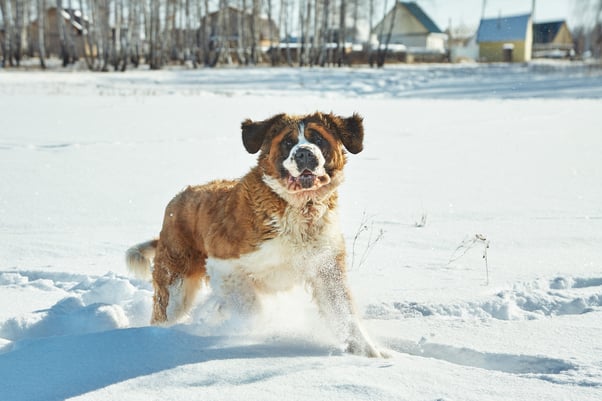
St. Bernards
Like Huskies, St. Bernards are also a commonly recognized cold weather dog, but these St. Bernard dog facts show that there’s more than meets the eye with these big, friendly giants:
- They were bred by monks in the Alps for rescue missions, helping to find people buried in snow on their pilgrimages to Rome.
- St. Bernards are gentle giants with a calm temperament and are known for their loving and tolerant personalities.
- Often known as a ‘nanny’ dog due to their affectionate nature, especially around children. You may recognize “Nana” in Disney’s Peter Pan as a St Bernard.
- Due to their loose jowls, St Bernards are known for drooling.
- They are muscular and powerful, capable of covering very rough ground.
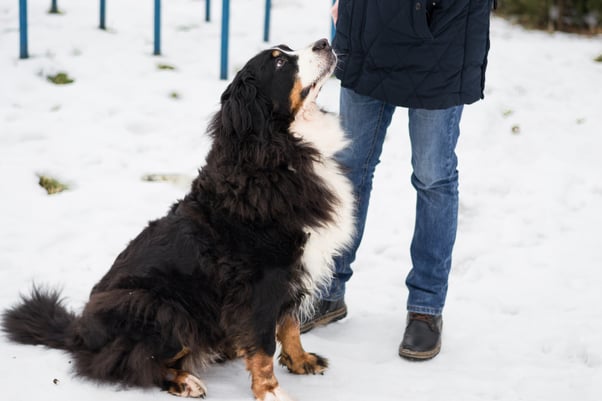
Bernese Mountain Dogs
Bernese Mountain Dogs are from the Swiss Alps and are known for their playful temperament and hardworking nature. Some other Bernese Mountain Dog facts include:
- They are Swiss farm dogs that developed over 2,000 years ago, used for pulling carts and herding cattle in the mountains.
- Their name refers to where they were bred: ‘Bern Canton’, which is a region in central Switzerland.
- This cold weather dog breed is extremely strong and can pull up to 10 times their own weight.
- Bernese Mountain Dogs are playful and can retain their puppy-like attitude well into adulthood.
- They are loyal and affectionate and are very social, so they love to be included in all aspects of family life.
Akitas
Japanese Akitas are known for their plush coat and adorable curly tail. Although they look smaller in size than other cold weather dog breeds, they are a powerful bunch!
- Akitas are exceptionally strong dogs capable of exerting a bite force of 350-400 PSI and possessing high levels of endurance.
- They are the largest of the Japanese breeds, originally bred in the 1600s and developed as hunters and guard dogs.
- They need experienced handling as well as early and ongoing socialization and training.
- Akitas have taken on many roles, such as hunting dogs, guard dogs, police dogs, show dogs, and much-loved companions.
- They are reserved with strangers but form deep bonds with their dog parents.
- Akitas have webbed toes to help with weight distribution on snow and ice.
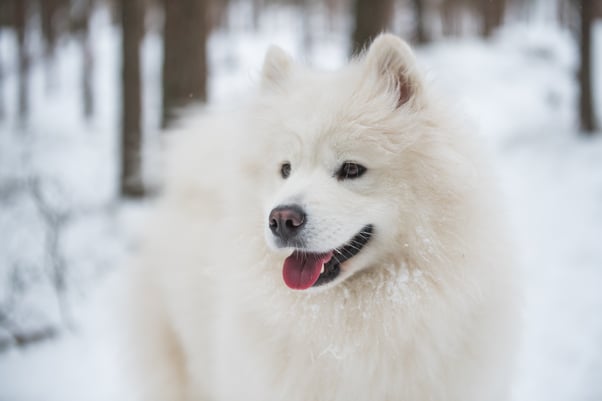
Samoyeds
Unlike their ancestors, who had black or brown and white markings, Samoyeds are now known for having a white, cream, or biscuit coat colour. The white coat of this cold weather dog helps them blend right in.
- The Samoyeds were Siberian herders, often herding reindeer and pulling sleds, bred originally by the Samoyede, who were semi-nomadic people.
- Their plush, dense white coat ‘stands’ off their body to provide excellent insulation.
- Samoyeds are a friendly, social, and devoted dog who prefer to be with company, but they do enjoy digging, so garden security is essential!
- They are also known as smiling dogs, as their mouths are upturned to help prevent the formation of icicles!
Caring for Cold Weather Dogs
- Grooming—Their thick coats mean that they need regular grooming, around 2-3 times a week, especially during shedding seasons.
- Exercise—Their high stamina means that they need substantial physical and mental stimulation to prevent boredom and keep them entertained. Dog agility can be a great way to keep them active.
- Safety—The playful nature of cold climate breeds means that they are excellent escape artists, known for digging or jumping over fences.
- Climate sensitivity—They may struggle in hot weather, so take precautions to keep them cool in summer and be considerate when planning exercise in the warmer months.
- Training—They are intelligent but may have an independent or mischievous nature, so consistent, reward-based training is essential. Using positive reinforcement from a young age can help them learn desired behaviours. For example, training them from puppyhood to not to pull on their leads is beneficial, as this habit can become problematic when they are older and much heavier!
- Company—Many cold weather dog breeds, such as Huskies and Malamutes, for example, thrive on companionship and love spending quality time with their humans.
- Consideration—Although these breeds are adapted to cold weather, they should not be left outside in very cold weather without access to a dry shelter.
For more fun facts about dog breeds, keep exploring the ADAPTIL blog online. And don’t forget to sign up for our newsletter to remain in the loop with all our latest updates!
Leave A Comment
Want to sign up for our blog?
Information Notice
The personal information collected is intended for Ceva Santé Animale, and Ceva group companies, in order to manage your request.This information may be passed on to service providers in order to organize this management. In accordance with the Regulations on personal data you have rights of access, rectification and limitation of processing of your data. You may also, in certain limited cases, oppose the treatment, withdraw your consent and request the deletion and portability of your data. For any request relating to your personal data please go to this page