
Whether it’s a brand-new car, a stylish coat, or someone with a particularly delicious-looking ice cream, it’s fair to say we all experience a little jealousy every now and then (… we knew we should have gone for the salted caramel). But the question today is: can dogs get jealous too?
Many dogs show behaviours that certainly look like jealousy—especially when their favourite human gives attention to someone, or something, else. But is that the same sort of jealousy that humans feel?
In today’s blog, we’re going to take a look at how you can recognize when a dog is jealous, why these behaviours happen, and how to support our pooches by building emotional security and harmony in your home.
Canine Jealousy Explained: Do Dogs Really Get Jealous?
So, let’s get straight to the point: do dogs get jealous?
The fact is that dogs don’t experience jealousy in the complex, self-reflective way humans do. Case closed then, right? End the blog!
But … maybe not quite so fast. While dogs may not feel jealousy exactly as we do, scientific studies show that dogs can display behaviours linked to social competition, insecurity, and attention-seeking. For example:
- A 2014 study found that dogs pushed, snapped, or tried to get between their human and a realistic-looking toy dog more often than when their human interacted with non-social objects.
- A 2021 study showed dogs exhibited distress when their human was interacting with a rival (a fake dog), even when this happened out of sight.
- A 2009 study showed dogs stopped cooperating when they saw another dog receiving treats for the same task while they received none.
These findings suggest canine jealousy is not the same feeling we humans go through, but dogs do experience:
- A desire to protect valued social relationships
- Worry when the bond with their caregiver feels threatened
- Resource guarding or attention-seeking
- Social competition, especially in multi-dog households
- Stress due to changes in environment or routine
So, can a dog get jealous? In many cases, yes—they can feel discomfort or insecurity when their social world feels uncertain. But the good news is, understanding these aspects of canine jealousy helps us support our dogs more effectively.
Common Signs of a Jealous Dog
Knowing the signs of a jealous dog helps you recognize what your dog is feeling, allowing you to respond in a supportive way. Jealous behaviours may include:
Pushing Between You and Another Dog or Person
Nudging, pawing, or physically placing themselves between you and another dog or family member is a common sign of canine jealousy.
Barking, Whining, or Attention-Seeking
Vocalizing and repeatedly trying to engage you can be a sign of insecurity or stress.
Guarding Toys, Beds, or People
A jealous dog may guard ‘valued’ people or objects, particularly around other dogs.
Clingy or Velcro Behaviour
Some dogs begin following their human constantly or refusing to settle unless they are close.
Destructive Behaviours
Chewing, digging, or toileting in the house may occur when stress levels rise—especially during changes in routine.
Understanding When Jealous Dog Behaviours Happen
Before you go looking into how you can stop a jealous dog from behaving in certain ways, it’s important to understand the context. Ask yourself why the behaviour is happening. Jealous-like behaviours are often triggered by:
- A new dog or pet in the home
- A new baby, partner, or housemate
- Changes in routine or environment
- Perceived unfairness (such as one dog receiving more attention or rewards)
- Reduced predictability in their day
Not all situations are equal—some dogs might show these behaviours consistently, while others only show them during specific events.
 Next, let’s look at two of the most common situations where we’re likely to see canine jealousy—in multi-dog homes and when new people join the home—and what we can do to help.
Canine Jealousy in Multi-Dog Households
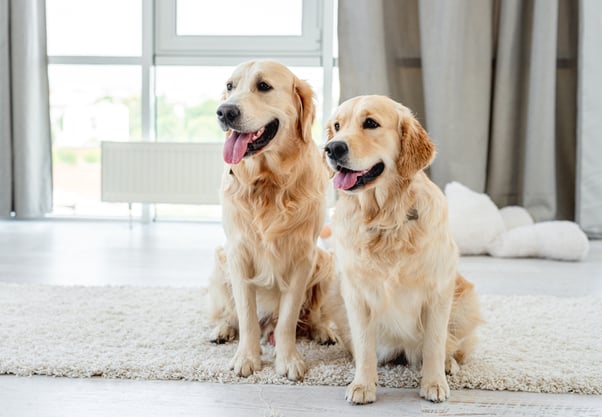
In multi-dog homes, it’s common for dogs to compete for attention, food, toys, and even sleeping spaces. Each dog’s personality and the relationships between them will influence how smoothly they coexist.
Tips for Harmony in Multi-Dog Homes
- Introduce new dogs slowly and calmly
- Ensure equal, individual attention and interaction time
- Reward each dog fairly (or train them apart if needed)
- Feed dogs separately to avoid resource guarding
- Include individual training and play sessions
- Watch for subtle stress signals
- Provide separate resting spots
Using an ADAPTIL Calm diffuser can also be highly effective for creating a peaceful atmosphere for all dogs in your home, making shared spaces feel more reassuring. We recommend plugging the diffuser into an electrical socket in the room in which your dogs spend the most time for the best results.
Jealous Dog Behaviour When New People Join the Home
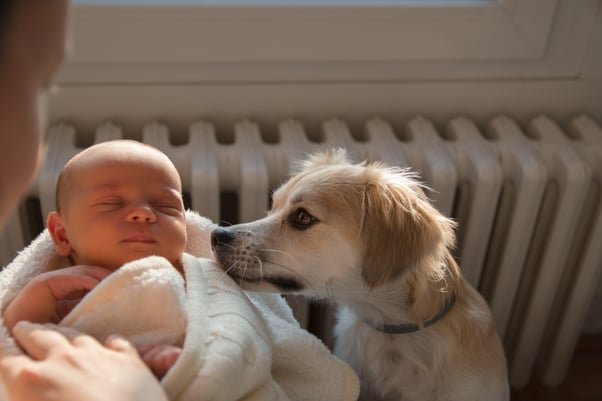
Dogs may similarly need time to adjust when new people enter the home, whether it’s a new baby, partner, housemate, or even just a visiting friend or relative. These introductions often lead to changes in routine and environment, so it’s important to bear this in mind when considering how you can support your dog.
Helping Your Dog Adjust to New People
- Use gradual, supervised introductions
- Allow your dog to approach at their own pace
- Pair interactions with praise and tasty treats
- Provide plenty of mental and physical stimulation
- Keep routines consistent
- Avoid punishing clingy or insecure behaviours—instead, gently redirect and reward calm moments
Preparing in advance, especially when expecting a new baby, can be extremely helpful. This includes familiarizing your dog with new sounds, smells, and activities ahead of time.
How to Stop a Jealous Dog: Building Your Dog’s Emotional Security
Reducing canine jealousy starts with helping your dog feel safe and understood. This means:
1. Maintain Routine & Predictability
Dogs thrive when their day is predictable. Keep feeding, walking, and play schedules consistent.
2. Give Individual Quality Time
One-on-one walks, training, and play strengthen your bond and reduce competition.
3. Provide Enough Mental & Physical Stimulation
Interactive toys, training games, sniffing walks, puzzle feeders, and regular play all help your dog feel fulfilled.
4. Gradually Introduce New Pets or Family Members
Begin by letting your dog observe at a distance, rewarding calm behaviour. Move at their pace.
5. Provide Reassurance
ADAPTIL can help soothe dogs during transitions or when feeling insecure, providing comforting messages that help dogs feel safe and supported. Our ADAPTIL Calm diffuser is perfect for multi-dog homes or changes in routine, while the ADAPTIL Calm Collar is great for individual dogs needing extra reassurance during outings or transitions.
When to Seek Extra Support
Consult your vet or a qualified behaviourist if:
- Your dog’s behaviour escalates
- You’re concerned about aggression or guarding
- You notice sudden changes in behaviour
- You’re preparing for a new pet or baby and want guidance
Helping Your Dog Feel Loved & Secure
So, can a dog get jealous? Absolutely. While it may not be identical to our understanding of jealousy, dogs certainly feel insecure or fear losing our attention when a shake-up occurs in their environment.
Fortunately, by recognizing the signs of a jealous dog and understanding the root of the behaviour, we can introduce gentle strategies to help our pooches feel safe and valued.
For more guidance on supporting your dog’s well-being, keep exploring our ADAPTIL blogs online. And while you’re here, don’t forget to sign up for our newsletter to stay up to date with all the latest tips and advice!
Leave A Comment
Want to sign up for our blog?
Information Notice
The personal information collected is intended for Ceva Santé Animale, and Ceva group companies, in order to manage your request.This information may be passed on to service providers in order to organize this management. In accordance with the Regulations on personal data you have rights of access, rectification and limitation of processing of your data. You may also, in certain limited cases, oppose the treatment, withdraw your consent and request the deletion and portability of your data. For any request relating to your personal data please go to this page